samedi 11 juin 2016

9 Foods to Help You Lose Weight

Delicious foods that help you diet? It sounds too good to be true.
No doubt: Weight loss comes down to simple math. You have to eat fewer calories than you burn.
"Certain foods can help you shed body weight," says Heather Mangieri, RD, a spokeswoman for the Academy of Nutrition and Dietetics, "because they help you feel full longer and help curb cravings."
Some even kick up your metabolism. So take this list when you go to the supermarket:

1. Beans

Inexpensive, filling, and versatile, beans are a great source of protein. Beans are also high in fiber and slow to digest. That means you feel full longer, which may stop you from eating more.
related content

SLIDESHOW

Fun Facts About Fruits and Vegetables

Start

2. Soup

Good to Know

What helps you stay on track with your weight loss goals?

Start a meal with a cup of soup, and you may end up eating less. It doesn’t matter if the soup is chunky or pureed, as long as it's broth-based. You want to keep the soup to 100 to 150 calories a serving. So skip the dollops of cream and butter.

3. Dark Chocolate

Want to enjoy chocolate between meals? Pick a square or two of dark over the milky version. In one study, chocolate lovers who were given dark chocolate ate 15% less pizza a few hours later than those who had eaten milk chocolate.

4. Pureed Vegetables

You can add more veggies to your diet, enjoy your "cheat" foods, and cut back on the calories you’re eating, all at the same time. When Penn State researchers added pureed cauliflower and zucchini to mac and cheese, people seemed to like the dish just as much. But they ate 200 to 350 fewer calories. Those healthy vegetables added low-cal bulk to the tasty dish.

5. Eggs and Sausage

A protein-rich breakfast may help you resist snack attacks throughout the day.
In a study of a group of obese young women, those who started the day with 35 grams of protein -- that’s probably way more than you’re eating -- felt fuller right away. The women ate a 350-calorie breakfast that included eggs and a beef sausage patty. The effect of the high-protein breakfast seemed to last into the evening, when the women munched less on fatty, sugary goods than the women who had cereal for breakfast.

6. Nuts

For a great snack on the run, take a small handful of almonds, peanuts, walnuts, or pecans. Research shows that when people munch on nuts, they automatically eat less at later meals.

7. Apples

Skip the apple juice and the applesauce and opt instead for a crunchy apple. Whole fruit blunts appetite in a way that fruit juices and sauces don’t.
One reason is that raw fruit has more fiber. Plus, chewing sends signals to your brain that you’ve eaten something substantial.

8. Yogurt

Whether you prefer Greek or traditional, yogurt can be good for your waistline.
A Harvard study followed more than 120,000 people for a decade or longer. Yogurt, of all the foods that were tracked, was most closely linked to weight loss.
related content


That doesn't prove that yogurt caused weight loss, but it stood out among other foods
.9. Grapefruit
Yes, grapefruit really can help you shed pounds, especially if you are at risk for diabetes.
Researchers at Scripps Clinic in San Diego found that when obese people ate half a grapefruit before each meal, they dropped an average of 3 ½ pounds over 12 weeks. Drinking grapefruit juice had the same results.
But grapefruit juice doesn't have any proven "fat-burning" properties -- it may just have helped people feel full.
Be careful: You cannot have grapefruit or grapefruit juice if you are on certain medications, so check the label on all your prescriptions, or ask your pharmacist or doctor.

Shop Smart

Load your shopping cart with lots of lean protein, fresh veggies, fruit, and whole grains, says food scientist Joy Dubost, PhD, RD. The most important thing, when it comes to lasting weight loss, is the big picture of what you eat, not specific foods.

jeudi 9 juin 2016

The 25 Best Diet Of All Time


Get expert-backed healthy eating tips to help you reach your goals


1/26
Best weight loss tricks ever!
If you've ever tried to lose weight (and who hasn't), you've got to be mindful of whose advice you take. Your colleague says you need to cut out carbs. Your gym buddy knows the secret is to stop eating after 7 p.m. Your Facebook friend swears she’ll be in swimsuit shape by March if she only eats once a day. Your husband, well, he sneezes and the weight seems to fall off.
Drop 30 Pounds in 30 Days!
But do any of these tips really work? To help you shed those extra pounds—and keep them off—without starving yourself, ditching your social life, or eating only at odd times of the day, we talked to experienced nutritionists for real-world advice you can actually live with, day in and day out. We'll tell you how to focus on the delicious foods you can add to your diet, why you should be eating more often (yes!), the fat loss benefits of more sleep, and how even taking a few deep breaths can put you on a successful path to weight loss.
Here, the 25 best diet tips of all time. Say buh-bye to hunger and hello skinny jeans.

1. Never get too hungry
crackers
2/26
1. Never get too hungry
You make poor decisions when your judgment is compromised. Hunger is a primal urge that’s difficult to deny. When you're famished, it's hard to hold off until you can find healthy food. As a result, you end up eating anything that's not nailed down, and typically, regretting it. Planning meals and snacks works wonders to head off the intense hunger that can do a number on your best intentions to eat right. Always tote healthy snacks, such as an ounce of pistachios, a hard-cooked egg and some whole grain crackers, Greek yogurt, or 1/4 cup raisins. Don't skip meals or skimp on them, either. Here, 6 portable, protein-packed snacks that fill you up!
Elizabeth Ward, RD, author of MyPlate for Moms, How to Feed Yourself & Your Family Better
2. Be honest about your daily calorie allowance
calorie allowance
3/26
2. Be honest about your daily calorie allowance
Everyone has a calorie budget, whether you're trying to maintain your weight or lose a few pounds. I've found that people ignore this simple fact. Your calorie budget allows you to build a healthy diet, and it helps prevent frustration about weight control. The 2010 Dietary Guidelines for Americans provide suggested daily calorie intakes based on gender, age, and physical activity level. When you know your calorie budget, then you can plan on how many servings of fruits, vegetables, whole grains, low-fat dairy, and other protein sources to include every day.
Elizabeth Ward
More from Prevention: 8 Things You Didn't Know About Calories But Should
post-workout eating
4/26
3. Eat right post-workout
People are notorious for overestimating how many calories they burn during physical activity, which is often far less than actual calories burned. When you overestimate the calories you burn during exercise, you may eat more than you need, making weight loss and maintenance difficult. High-intensity exercise may drive women to eat more, and moderate exercise may be the key to easier weight control. To see how many average calories you’re burning during everyday activities and exercise, check out this chart from the CDC. You can see how easy it is to wipe out the calories burned during a workout with just a few extra nibbles during the day.
Elizabeth Ward
More from Prevention: How To Break the Work Out/Pig-Out Cycle
chicken, potatoes and vegetables
5/26
4. Use the red, orange and green rule
At each meal include one food that is any of these colors. By focusing on these foods, you'll be sure to get some produce on your plate and won't have space on your plate for higher-calorie fare. (Bonus: Colorful fruits and veggies help your skin look healthier and younger! Here's what to eat for glowing skin!)
Lyssie Lakatos, RD, and Tammy Lakatos Shames, RD, authors of The Secret To Skinny: How Salt Makes You Fat
woman with a forkful of salad
6/26
5. Eat one less bite
Doing this at every meal could save about 75 calories a day which equates to nearly an 8-pound weight loss in one year!
Lyssie Lakatos and Tammy Lakatos Shames
More from Prevention: 16 Ridiculously Simple Ways to Eat Less
woman drinking a glass of water
7/26
6. Be a heavy drinker
Water is essential for keeping the body hydrated and we're actually more likely to retain "water weight" by not drinking enough of it rather than by having too much. The needs of each person will be different, but the general recommended daily amount is 64 ounces. It also takes up space in your stomach so you'll feel fuller while taking in less calories. Find out the best non-boring ways to get in your recommended servings of water.
Lyssie Lakatos and Tammy Lakatos Shames
salt shaker
8/26
7. Kick the salt habit
Salt is a big contributor to weight gain and often a reason why the numbers on the scale aren't going down. The average American consumes twice the amount of salt they should have each day, leading to weight gain, bloating, and the inability to lose stubborn pounds. Salt can also make you feel hungrier and thirstier, so check the nutrition labels for high sodium levels and choose fresh over packaged or restaurant foods. You'll see a puffy face and belly go down quickly just by cutting back on your sodium intake and choosing more natural foods. Here's how to start reducing sodium in your diet.
Lyssie Lakatos and Tammy Lakatos Shames
chile peppers
9/26
8. Spice up your food
Adding hot spices to your meals can help curb hunger, according to a study in the British Journal of Nutrition. Need another reason to add some heat? Scientists at the State University of New York at Buffalo found that capsaicin (a compound found in chilies) triggers your brain to release feel-good endorphins. A full belly and a good mood? Pass the hot sauce!
Christine Avanti, CN, author of Skinny Chicks Eat Real Food
More from Prevention: Foods That Boost Your Metabolism
diet soda
10/26
9. Don't think diet soda will help you lose weight
A University of Texas Health Science Center study found that the more diet sodas a person drank, the greater their risk of becoming overweight. Downing just two or more cans a day increased waistlines by 500%. Why? Artificial sweeteners can disrupt the body's natural ability to regulate calorie intake based on the sweetness of foods, suggested an animal study from Purdue University. That means people who consume diet foods might be more likely to overeat, because your body is being tricked into thinking it's eating sugar, and you crave more.
A separate study found that even just one diet soda a day is linked to a 34% higher risk of metabolic syndrome, the group of symptoms including belly fat and high cholesterol that puts you at risk for heart disease. Whether that link is attributed to an ingredient in diet soda or the drinkers' eating habits is unclear. But is that one can really worth it? (Still not convinced? Check out five more health risks associated with drinking diet soda.)
nutrients
11/26
10. Focus on nutrient balance instead of calorie counting
Making sure an eating occasion has carbs, protein, and fat instead of just counting calories (like a 100-calorie pack) delivers better energy and fat loss results by giving the body what it needs, like quick- and longer-digesting nutrients so you stay full longer. See ashleykoffapproved.com/nutritionplan for guidance.
Ashley Koff, RD, Prevention Advisory Board member
More from Prevention: 7 Ways To Get Control Of Your Sugar and Starch Addiction
dinner table
12/26
11. Plate food away from where you're eating
By keeping food within eyesight as you are eating, you may find yourself reaching for a second helping even if you really aren't hungry. Place the food on the kitchen counter or stove, portion out a serving on your plate and then sit down at the table and eat. This way, if you want additional servings, you'll have to get up, which helps you to be more mindful of what you are eating.
Erin Palinski-Wade, RD, CDE author of Belly Fat Diet For Dummies
food journal
13/26
12. Keep a food record
We know you've heard this time and time again. Well, that's because keeping a food record is vital to losing weight and keeping it off long term. A study published in the American Journal of Preventive Medicine found that those who kept regular food records lost twice as much weight as those who didn't. When keeping a food record, make sure to track what you ate, how much you ate, anything you added to the food (condiments, oils, etc.), and what you drank. Also tracking your mood and appetite can be helpful and insightful into learning about your eating patterns as well!
Erin Palinski-Wade
More from Prevention: How To Trick Yourself Into Eating Less
vegetable soup
14/26
13. Start with soup
People who ate a low-calorie vegetable soup before a meal consumed 20% fewer calories at the meal, according to research from Penn State Unniversity. Have a low-calorie broth-based veggie soup before your largest meal of the day to reduce calories and lose weight without feeling hungry.
Erin Palinski-Wade
More from Prevention: 25 Delicious Detox Meals
clock plate
15/26
14. Take your time
Rapid eaters are often heavier than slow eaters, according to research from The University of Rhode Island. It takes 20 minutes for your stomach to send a message to your brain that you have eaten enough and are satisfied. If you rush your meal and eat rapidly, your body's satiety cues won't be tuned in to those feelings of fullness yet and it's easier to overeat. Try slowing down by chewing each bite at least 10 times, putting your fork down in between bites, and fostering a relaxing eating environment rather than eating on the run. (What should you do if you're dining out? Follow our no-gain guide.)
Erin Palinski-Wade
16/26
15. Outsmart your hunger hormone
Even the most motivated and focused dieter will struggle to be successful at weight loss once hunger takes over. Our bodies secrete a hormone called ghrelin, which controls hunger and drives our appetite. If we don't understand, monitor, and control our ghrelin, we can forget about losing weight. Science tells us that the best way to control ghrelin is to eat small, balanced meals about every 3 hours or so. That's because ghrelin will spike after about 3 to 4 hours of fasting, so eating with regularity helps keep this eating trigger at bay. Ghrelin will also spike if we're deprived of carbs, so it's important to give our bodies and brains the carb fuel they need. When we skip meals or avoid carbs, we're inviting ghrelin to spike, which increases and makes us feel emotionally hungry. It makes us crave sugar and can derail even the healthiest eating routine.
Manuel Villacorta, RD, author of Eating Free: The Carb-Friendly Way to Lose Inches
More from Prevention: Does Skipping Meals Cause Pain?
woman eating steak
17/26
16. Dine anytime
It's a myth that you'll gain weight as a direct result of eating after 7 p.m. I see many busy professionals at my private practice, and they often get home late. This doesn't mean that they should skip dinner if they're trying to lose weight.
Many times, people stop eating by 5 p.m., which results in overeating the following day. This cycle is not ideal as it shuts down your metabolism. You should eat 70% of your calories before dinnertime and 30% at dinner, whatever time that may be. Just give yourself at least 90 minutes to end your meal before you plan to go to sleep. You need at least 90 minutes to digest so you can sleep comfortably.
Manuel Villacorta
More from Prevention: How To Lose Weight All Day Long
kitchen
18/26
17. Set a date with your kitchen
Based on what I have applied in my practice, when it comes to weight loss we need to devote 80% of our efforts to nutrition and 20% to exercise.
One way to do this is to schedule time and make a date with your supermarket and kitchen. Restaurant dishes are outside of your control, and the fact is, most times, those outrageous portions come loaded with salt and fat. Start cooking at home to better monitor your calorie intake.
Schedule a day, like Sunday afternoon, to pre-cook for the week. Plan to roast a whole chicken. Cut up a batch of vegetables—like squash, peppers, eggplant, and sweet potatoes—toss them with a little olive oil and roast them in another pan alongside the chicken. Boil a pot of brown rice. Do all of this simultaneously and it should only take about an hour.
Now you have the makings for Monday's burritos, Tuesday's stew, Wednesday's pasta dish, and so on. Each working evening, you should only need about 15 minutes in the kitchen to put it together—less time than you might spend heating up a fat-, salt- and sugar-filled frozen pizza! (Get our 14 ways to make veggies less boring and work them into your diet more.)
Manuel Villacorta
More from Prevention: 17 Double-Duty Kitchen Gadgets
breathe
19/26
18. Breathe away cravings
This may seem obvious. After all, you have to breathe no matter what, right? But few of us breathe deeply or consciously. Think about it: when was the last time you took a long, slow, deep breath, and slowly let it out again? Deep breaths of that kind take you out of your immersion in momentary stress, oxygenate your brain and tissues, and they help to reduce stress hormones. Take breathing breaks throughout the day, or, better yet, pair those breaks with a quiet walk to disassociate from the stress. Just a couple of minutes of walking, a few long, deep breaths, and you will start to see the results in your body. (See the two yoga poses that help control cravings.)
Manuel Villacorta
woman holding balloons
20/26
19. Eat before a party or event
Don't arrive at a big meal, event, or party starving. One study found that you'll be 2.5 times more likely to start off overeating starchy carbs, fried or cheesy foods than those who didn't fast before the meal. And, you'll be more likely to eat 47% more calories of that first food before switching to healthier fare. Have a light snack before you go to an event so you don’t arrive ravenous.
Wendy Bazilian, DrPH, author of The SuperFoodsRx Diet
chopsticks
21/26
20. Be adventurous with chopsticks
Choosing chopsticks requires a bit more attention in picking up food from the plate. The portions are smaller, and eating with them takes more time because you have to closely watch each bite so the food doesn’t fall off. They can act as a reminder to slow down, savor and chew consciously which may help you realize you’re fuller sooner than you thought you’d be and then wind up eating less!
Wendy Bazilian
clothes closet
22/26
21. Wear fitted clothing
The elastic waistband is the dieter's fashion enemy number one. When you wear clothes that fit well and make you feel good, you have awareness gauges that give you clear signals to help you put on the brakes as you fill up. Use this as a way of staying mindful of your goals and to help keep you from overeating.
Wendy Bazilian
post-its
23/26
22. Celebrate healthy talk
Instead of using words like "fat," say "fit"; change "can't" to "can"; "weak" to "strong"; "unhealthy" to "healthy." It takes practice but it can start to rewire how you think about your health and weight goals.
New research commissioned by Special K surveying over 1,000 women, found that 9 out of 10 women who have a positive attitude about weight management reported either losing or maintaining their weight in the past year versus only about 50% of those with a negative attitude. And beyond being more successful, those with a positive attitude were eight times less likely to report having gained weight than women who think negatively.
Wendy Bazilian
Share your positive weight messages with us on Facebook!
breakfast
24/26
23. Eat breakfast without fail
A study published in the British Journal of Nutrition tracked the diets of nearly 900 adults and found that when people ate more fat, protein, and carbohydrates in the morning, they stayed satisfied and ate less over the course of the day than those who ate their bigger meals later on. Unfortunately, many Americans start off on an empty stomach. In one survey, consumers reported that even when they eat in the morning, the meal is a full breakfast only about one-third of the time. If you're feeling full-blown hunger before noon, there's a chance you're not eating enough in the morning. Shoot for a minimum of 250 calories and aim to get a serving of protein in so you’ll feel fuller longer.
More from Prevention: 10 Morning Meals That Fight Belly Fat
chocolate cupcake
25/26
24. Take 10 minutes to eat a treat
Try this strategy to permanently reduce cravings: Portion out one serving of your favorite treat, taking a minute to smell it, look at it, and think about it. Take one small bite. Chew slowly, moving it around your mouth and focusing on the texture and taste, then swallow. Ask yourself whether you want another bite or if that one satisfied you. If you still want more, repeat, this time chewing the food 20 times. Continue this eating exercise for as long as you want or until you finish the serving (it should take about 10 minutes). "When you take the time to slow down and be more mindful of what something really tastes like, you'll feel more satisfied," says Lesley Lutes, PhD, an associate professor in the department of psychology at East Carolina University.  "Many of our participants told us that after a while, they didn't enjoy the treat as much as they thought they would, or they were content after just a couple of bites and were better able to stop eating when they were satisfied."
26/26
25. Sleep away weight gain
Make a point of turning in earlier and you’ll see weight loss within a week. Recent research from the University of Pennsylvania found even just a few nights of sleep deprivation can lead to almost immediate weight gain. Scientists asked participants to sleep about 10 hours a night for two days, followed by five nights of sleep restriction and four nights of recovery. After the 11 days, the sleep-deprived group gained almost 3 pounds, compared with a well-rested control group. (Trouble falling asleep? See 20 Tips For a Better Night's Rest.)

mercredi 8 juin 2016

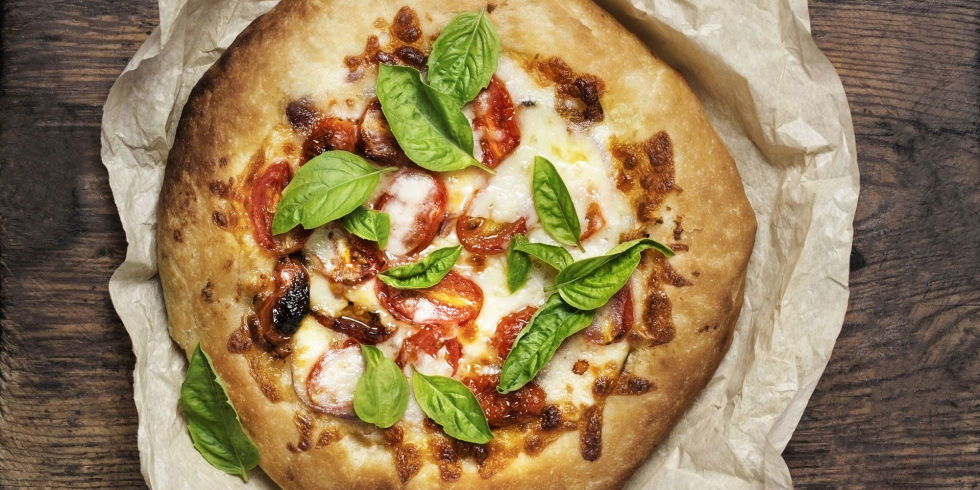
Good News: Eating Pizza Can Help You Lose Weight

 We're not kidding—and we've got the science to prove it. ​


Say goodbye to food guilt, because "cheat days"—or treating yourself to your favorite not-so-healthy-food (pizza, ice cream, potato chips)—is now officially a good thing, according to a recent study.
Planned-ahead diet cheating may help you stick to your healthy eating plan for the long haul, thereby leading to more weight loss, according to a study featured in the Journal of Consumer Psychology, completed by the Tilburg University in Holland and the Catholic University of Portugal in Lisbon.
Scientists studied two groups of participants: The first was limited to 10,500 calories per week with no cheat days, and the second was also limited to 10,500 calories per week, but were allowed to eat whatever they wanted on Sundays (within reason), according to Men's Health.
At the end of two weeks, both groups lost weight, but only the second group was motivated to keep going and work toward their healthy eating goals. 


And it all makes sense because really, because these findings simply stress the importance of balance and planning ahead. Treating yourself by enjoying your favorite foods on occasion will help you achieve long-term success, as long as it's occasional and mindful, the researchers said. Choosing when and what you'll treat yourself to ensures it's not thoughtlessly happening all the time and that those pizza and ice cream portions are within reason. So go ahead and indulge in that cupcake on a Friday night after a long week—you deserve it!

How to Lose Weight Fast With 3 Easy Simple Steps, Based on Science


Fit Woman Holding a Scale And an Apple 


There are many ways to lose a lot of weight fast.
However, most of them will make you hungry and unsatisfied.
If you don’t have iron willpower, then hunger will cause you to give up on these plans quickly.
The plan outlined here will:
  • Reduce your appetite significantly.
  • Make you lose weight quickly, without hunger.
  • Improve your metabolic health at the same time.
Here is a simple 3-step plan to lose weight fast.


1. Cut Back on Sugars and Starches

The most important part is to cut back on sugars and starches (carbs).
These are the foods that stimulate secretion of insulin the most. If you didn’t know already, insulin is the main fat storage hormone in the body.
When insulin goes down, fat has an easier time getting out of the fat stores and the body starts burning fats instead of carbs.
Another benefit of lowering insulin is that your kidneys shed excess sodium and water out of your body, which reduces bloat and unnecessary water weight .
It is not uncommon to lose up to 10 pounds (sometimes more) in the first week of eating this way, both body fat and water weight.
This is a graph from a study comparing low-carb and low-fat diets in overweight/obese women).

Weight Loss Graph, Low Carb vs Low Fat
The low-carb group is eating until fullness, while the low-fat group is calorie restricted and hungry.
Cut the carbs, lower your insulin and you will start to eat less calories automatically and without hunger (4).
Put simply, lowering your insulin puts fat loss on “autopilot.”
Bottom Line: Removing sugars and starches (carbs) from your diet will lower your insulin levels, kill your appetite and make you lose weight without hunger.

2. Eat Protein, Fat and Vegetables

Each one of your meals should include a protein source, a fat source and low-carb vegetables. Constructing your meals in this way will automatically bring your carb intake into the recommended range of 20-50 grams per day.
Girl Eating Kebab
Protein Sources:
  • Meat – Beef, chicken, pork, lamb, bacon, etc.
  • Fish and Seafood – Salmon, trout, shrimps, lobsters, etc.
  • Eggs – Omega-3 enriched or pastured eggs are best.
The importance of eating plenty of protein can not be overstated.
This has been shown to boost metabolism by 80 to 100 calories per day .
High protein diets can also reduce obsessive thoughts about food by 60%, reduce desire for late-night snacking by half, and make you so full that you automatically eat 441 fewer calories per day… just by adding protein to your diet.
When it comes to losing weight, protein is the king of nutrients. Period.
Low-Carb Vegetables:
Vegetables
  • Broccoli
  • Cauliflower
  • Spinach
  • Kale
  • Brussels Sprouts
  • Cabbage
  • Swiss Chard
  • Lettuce
  • Cucumber
  • Celery
  • Full list here.
Don’t be afraid to load your plate with these low-carb vegetables. You can eat massive amounts of them without going over 20-50 net carbs per day.
A diet based on meat and vegetables contains all the fiber, vitamins and minerals you need to be healthy. There is no physiological need for grains in the diet.
Butter Curls
Fat Sources:
  • Olive oil
  • Coconut oil
  • Avocado oil
  • Butter
  • Tallow
Eat 2-3 meals per day. If you find yourself hungry in the afternoon, add a 4th meal.
Don’t be afraid of eating fat, trying to do both low-carb AND low-fat at the same time is a recipe for failure. It will make you feel miserable and abandon the plan.
The best cooking fat to use is coconut oil. It is rich in fats called Medium Chain Triglycerides (MCTs). These fats are more fulfilling than others and can boost metabolism slightly.
There is no reason to fear these natural fats, new studies show that saturated fat doesn’t raise your heart disease risk at all .
To see how you can assemble your meals, check out this low carb meal plan and this list of low carb recipes.
Bottom Line: Assemble each meal out of a protein source, a fat source and a low-carb vegetable. This will put you into the 20-50 gram carb range and drastically lower your insulin levels.

3. Lift Weights 3 Times Per Week

Dumbbells
You don’t need to exercise to lose weight on this plan, but it is recommended.
The best option is to go to the gym 3-4 times a week. Do a warm up, lift weights, then stretch.
If you’re new to the gym, ask a trainer for some advice.
By lifting weights, you will burn a few calories and prevent your metabolism from slowing down, which is a common side effect of losing weight .
Studies on low-carb diets show that you can even gain a bit of muscle while losing significant amounts of body fat .
If lifting weights is not an option for you, then doing some easier cardio workouts like running, jogging, swimming or walking will suffice.

mercredi 27 janvier 2016

20 Ways to Win at Losing Weight

The pure mathematics of weight loss is simple—eat less, move more—but if knowing that were all it took, everyone would be in great shape. Los Angeles–based personal trainers Bob Harper and Jillian Michaels have been helping to define the bodies of celebrities like Gwyneth Paltrow, Ellen DeGeneres, and Laura Dern, and they've also changed the lives of contestants on NBC's weight loss reality show, The Biggest Loser. Michaels is co-owner of Sky Sport and Spa. Here's what they know about diet and fitness success.


1. There's no one secret to being thin.
Losing weight and keeping it off, says Jillian Michaels, "requires a holistic approach that combines proper diet, good workouts, knowing why you overeat, and understanding how to push yourself toward change." The desire to change, she adds, really has to come from inside. "Sometimes you've got to have hit bottom, like realizing you can't play tag with your kids without getting out of breath," Jillian says. "If you're not ready for something new, no matter what you try, it's not going to work."

2. Don't blame your genes.
Yes, everyone is built differently, and some of us gain weight more easily than others. But "to say, 'I can't make any improvement because I have fat genes' is b.s.," says Jillian. "It's not true, and it's disempowering. No matter what your genes are, you have the ability to make the right choices about eating and exercise."

3. Cut yourself some slack.
The main thing is to make peace with your body before you try to change it, says Bob Harper. "Okay, you're overweight. But how great that you've decided to do something about it! Accepting where you are at the moment takes away the white-knuckle feeling that can sabotage you fast: 'I've got to lose weight! I've got to! Damn, I didn't lose any weight today. I've failed! Forget it, I won't even try anymore.'"

4. Study up.
Before you lift a toe, do some legwork. "You can learn about nutrition and diets on Web sites like howstuffworks.com or through books like Nutrition for Dummies," says Bob. Preparation helps you train wisely, too. "You can't just jump into an exercise program without knowing what you're doing," says Jillian. "At best you'll waste your time; at worst you could get injured." Find a beginner class or trainer to teach you the nuts and bolts. Or use books, fitness magazines, and videos. "Crunch Fitness puts out some awesome books that show all the basics," she says, "including Beginner's Luck, by Brad Hamler, and Perfect Posture, by Scott G. Duke."

5. Keep an honest food journal.
"It's essential," Jillian insists. "You need to track what you eat in detail. Not 'peanuts,' but how many peanuts. What time of day? And why are you eating just then? Writing it down makes you accountable and aware, and it helps you identify the mistakes you're making. Maybe your blood sugar is fluctuating through the day. Maybe you're skipping meals. Maybe you feel like you're not eating that much but, when you add it up, it comes to 2,500 calories a day."

Tip #6: Experiment to find your own diet

6. Experiment to find your own diet.
Some foods are obvious no-no's: trans fats, processed food, white sugar, and excessive alcohol. Beyond that, though, everyone's body is different, and just because a diet book is on the best-seller list doesn't mean its program will work for you. "Some people thrive on a strictly high-protein diet, while others do great with fruits, grains, and beans," says Jillian. "You've got to ask yourself questions: When I eat meat, do I feel sluggish or agitated? When I eat fruit, do I feel satiated? Sometimes it takes a lot of trial and error to find the right combination of foods. And as a trainer, I've learned that you also have to take human frailty into account. If you can't bear the idea of giving up bread, choose whole grain and try to eat it with some protein." The protein, she explains, will slow the breakdown of the bread so its carbs won't cause your blood sugar to spike and then—as so often happens—crash, making you hungry again for something starchy.

7. Don't ever starve yourself.
Dieting means cutting calories, but less isn't always more. "One of the biggest misconceptions I've seen—including among the women I'm training on the show—is that the less you eat, the more weight you'll lose," says Jillian. "Maybe at first. But your body will think you're dying from lack of food, and your metabolism will adjust by slowing to a crawl." Most women should never eat less than 1,200 calories a day.

8. Outsmart your exercise excuses.
A routine you'll actually stick to has to have elements that appeal to you. If you love being outdoors, try hiking or walking somewhere inspiring—a beach, a park, a historic neighborhood. You also need to assess what motivates you. If you get competitive and push yourself more when you're around others, join a gym, take a class, or play a sport like tennis or softball. If you're good at finding reasons to skip a session, make a commitment to do something with friends, so you can't back out without letting everyone down.

9. Don't forget the weights.
The best fitness routine includes a combination of heart-rate-boosting exercise like jogging or stair-stepping and resistance training, which means either lifting weights or using gym equipment. Cardio burns the fat; resistance training creates shape and increases muscle mass—and the more muscle you have, the faster your metabolism runs, even when you're resting.

10. Start with baby steps.
Working out for 20 minutes a day isn't enough to get you buff, but "even that will start speeding up your metabolism," says Jillian. "Walk to a local restaurant during lunch hour, walk the dog, walk to the convenience store. The idea is to get moving."

Bob couldn't agree more. "Thinking, I can't get in shape because I don't have two hours a day to exercise is just another excuse for doing nothing," he says. "Start small, because small can only get bigger. Starting big means burning out, blowing out, getting hurt—another reason to stop."

11. Tough it out.
Accept that the early days of a fitness program may not be fun. "You've just got to push through," says Jillian. "Your body is an amazing machine. After two weeks, the walk that used to have you sucking wind won't even tire you. It took only that long for the women on The Biggest Loser to discover they could do exercises they initially found impossible. By the end of the first month, you'll see some pretty significant changes. That's when I get calls from my clients: 'Oh my God, I felt my hip bone!'"

12. Don't expect dramatic weight loss to continue.
Depending on where you're starting from, "during the first two weeks of a new diet and fitness routine, you can drop as much as 15 pounds," says Bob. "After that, it tends to be one to two pounds a week. But everyone hits plateaus, which means that you can diet and exercise religiously for weeks without losing any weight at all. You just have to stay strong and ride it out. Life is all about ebbs and flows, and if you stick to your program, the weight will start coming back off."

13. Keep your body guessing.
Constantly surprising your body will help you avoid those weight loss stalls and get you out of them if they do occur. "You want to keep your food intake fluctuating, so your body never quite adjusts," Jillian says. "With women trying to lose weight, I like to vary it by around 400 calories. One day they'll eat 1,700 calories, then drop to 1,300 for two days, then two at 1,500, and one at 1,700 again."

The same principle holds true for exercise. "At first doing the exact same thing over and over is fine," says Bob. "You'll see results, which will keep you motivated. Eventually, though, at around four weeks, you'll need to vary the routine or your body will get used to what it's doing. But the smallest change can make a huge difference. If you've been walking on a treadmill for 30 minutes, slow your pace by half and increase the incline. If you're riding a stationary bike on the manual setting, switch to a program that imitates climbing hills. At one point, the contestants on The Biggest Loser had been doing barbell curls for a few weeks. So I had them change to just holding the barbells for five minutes without letting them drop. They couldn't believe it—it was killing them!"

14. Visualize long-term change, not deprivation.
"My clients, particularly those who have to lose a lot of weight, are often very angst-ridden when they start," says Bob. "They say, 'You're going to take away the food I love! You're going to make me do things I don't want to do, which is why nothing has ever worked for me!' I try to get them to relaaaax. This isn't about beating yourself down but lifting yourself up. It involves realizing why your eating has gotten out of control and starting to think about food differently. In fact, when my clients get close to their goal weights, I often give them one day a week to eat whatever they like—popcorn, M&M's. Losing weight and keeping it off means balance—not going without treats for the rest of your life."

15. Learn to hit the pause button.
Part of changing your eating patterns requires altering your reflexes. "When you find yourself thinking, I'm going to get an ice cream cone because I've had such a bad day, just stop," Bob says. "Take a moment and ask yourself, Am I really hungry? Do I really want this? Why do I want it? The pause gets you thinking instead of simply acting on impulse."

If it turns out that what you're feeling is something other than hunger, Jillian adds, find a nonfood treat. "Instead of eating the ice cream, reward yourself with a manicure, massage, or bubble bath. Do something positive, healthy—something that makes you feel beautiful and is incompatible with breaking yourself down."
16. Just forget about your thighs.
Try viewing exercise as helping you increase what you're able to do, rather than fixing a "flawed" body part. "Whenever I start working with women, I hear complaints like 'My thighs are too big' or 'What can I do about my butt?'" says Bob. "Once you get someone moving, however, that can change to, 'Wow, I never knew how weak I was.' Being aware of a flaw can be good for getting you started, but it's more productive to think about being fit and healthy than about how you look."

When you become aware of how physically strong you can be, adds Jillian, "it translates into all other areas of your life."

14. Don't be afraid to take a break.
"If your legs are feeling heavy and you're constantly sore, you've been overtraining," says Jillian. "Take some time out, up your calories by 10 percent, relax. Let your system recuperate." Otherwise you're at risk of hitting a plateau or burning out and giving up.

18. Consider calling in professional help.
Personal trainers can be invaluable if you're a rank beginner, have hit the doldrums, or worry that you can't stay motivated on your own. Depending on where you live and how long the trainer has been in business, the cost can be as little as $25 an hour or as much as $300. Sometimes one or two sessions are all you need to get on track. When deciding on a trainer, look for certification by organizations like the International Sports Sciences Association, the National Endurance & Sports Trainers Association, the American Council on Exercise, American College of Sports Medicine, the American Fitness Training of Athletics, or the Aerobics and Fitness Association of America. Ask the trainer about his or her background. "Is this an actor or someone with other aspirations? If so, move on," says Jillian. "Get references and call them. A trial session can tell you whether your individual needs and goals will be addressed or if you'll just be thrown into a one-size-fits-all routine. Finally, you have to ask yourself, Is this someone I like? Someone who'll inspire me? Someone I'll want to see at 6 in the morning? If you're thinking of joining a gym because it provides personal trainers, "ask for a free week of private training before you sign the contract," says Bob. And make sure that gym trainers, too, have the proper credentials.

19. Don't even think about those gimmicks.
"Any gadget that promises you a rock-hard butt and firm abs in two minutes a day is a waste of money," says Bob. "Fitness doesn't happen overnight."

20. Keep your perspective.
Don't count on getting the spectacular body of a movie star—unless, that is, you were blessed with a naturally great figure. And certainly don't blame yourself for not measuring up (or down, as the case may be). "Celebrities have private chefs; trainers like me working with them 24 hours a day, six days a week; and plastic surgeons to fix whatever problems are left," says Jillian. And then there's good lighting, airbrushing, and all sorts of photographic wizardry. "Hollywood," she adds, "is a very small piece of the world. It is not reality."